
This is a new, sourced editorial analysis of a historical production. It isn't a recreation of the original website, and tickets aren't currently available.
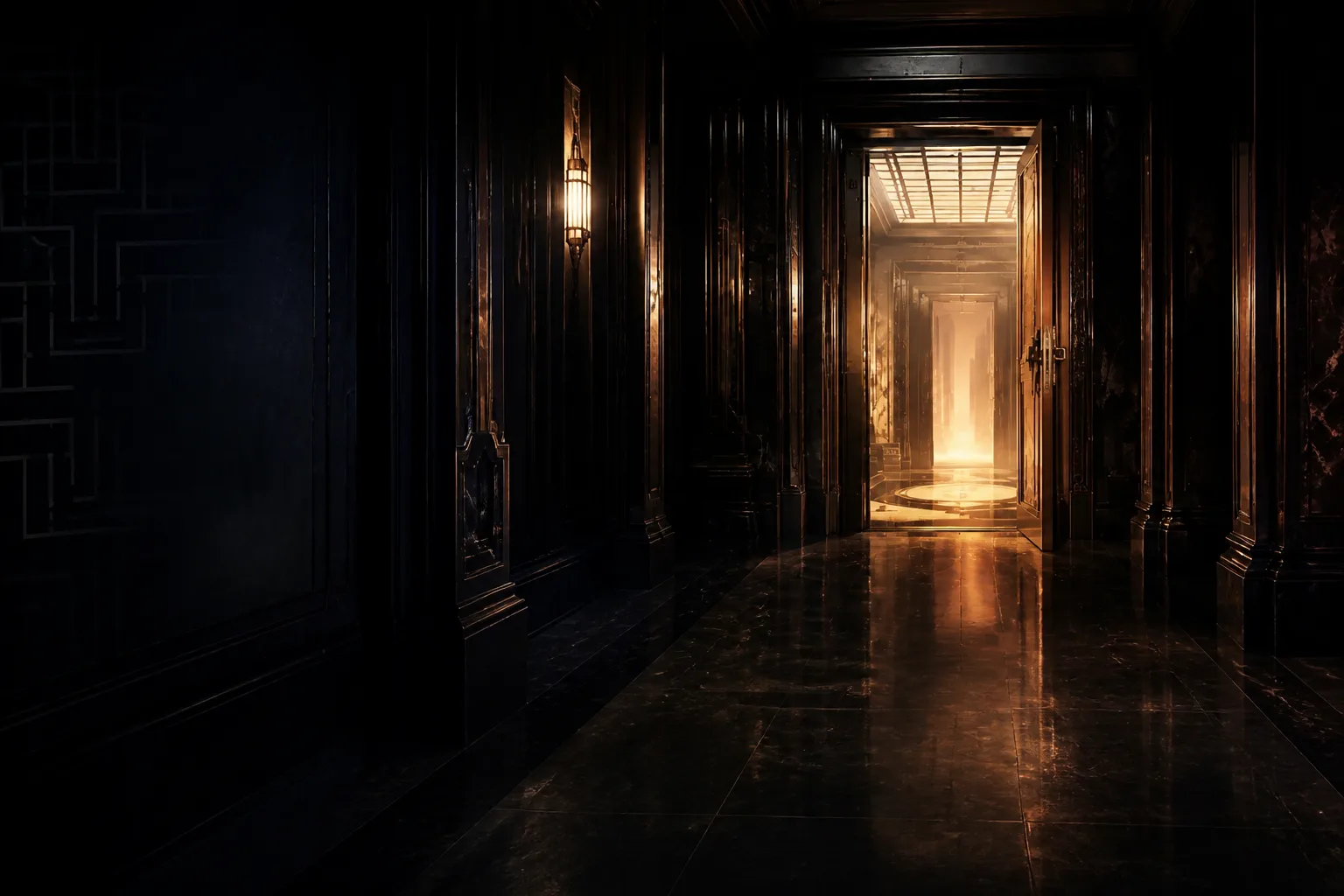
A story-first escape room in Koreatown
Paradiso: Chapter 1 was an immersive thriller created and directed by Michael Counts in New York City. First presented in 2016, it combined the timed problem-solving of an escape room with actors, theatrical staging and a continuing fictional world.
Theatre Development Fund described groups of ten entering a noir-like nightmare inspired by the atmosphere of Koreatown. Contemporary reporting placed the mysterious Virgil Corporation at the centre of the fiction. Participants followed clues through a sequence of spaces while trying to decide whether the people guiding—or obstructing—them could be trusted.
The result sat in two traditions at once. It had puzzles, a clock and an objective, but it also asked players to read characters, accept dramatic uncertainty and act from inside a role. That mix is why reviews alternately called it an escape room, immersive theatre and an existential game.
How Chapter 1 expanded the familiar format
A conventional escape room usually starts with a briefing at the venue. Paradiso could start earlier. Vice reported that participants received mysterious text messages before arrival and were directed through a functioning karaoke lounge before entering the Virgil Corporation setting.
That prelude turned logistics into narrative. The address, the route and the person met along the way weren't only instructions; they were evidence about the world. By the time the formal timer began, participants had already leapt from ordinary New York into the fiction.
A sequence rather than a single room
Chapter 1 unfolded through multiple rooms. Progress depended on puzzle solving, yet scenery, effects and performers carried information too. You had to notice not only what could be unlocked, but what each transition suggested about the organisation you'd entered.
Counts Projects describes the production as the first instalment in an expanding narrative loosely connected to Dante's Divine Comedy. That serial ambition also shaped the name “Chapter 1”: the experience was framed as entry into a larger mythology, not a self-contained themed challenge.
Four design choices worth studying
- Fiction before front door: pre-arrival messages made anticipation part of the dramatic structure.
- Actors as responsive systems: performers could redirect attention, raise stakes and react with more nuance than automated clues.
- Transitions with meaning: moving through several spaces made progress feel like discovery inside a larger institution.
- A world beyond one session: recurring names, organisations and chapters suggested that the story continued outside the booked hour.
The timer created urgency; the fiction gave that urgency a reason to matter.
What contemporary reviews reveal
Coverage agreed that Paradiso attempted something more theatrical than the typical escape room of its period, but reviewers didn't agree that every element blended cleanly. Vice emphasised the convincing world and the uncertainty between reality and performance. Time Out admired the elaborate mythology and physical details while arguing that the pressure to solve could distract from absorbing the story.
That tension is useful, not incidental. Story asks people to slow down, notice and interpret; timed puzzles ask them to move quickly and optimise. Hybrid experiences have to decide when those modes reinforce each other and when the audience needs room to change gears.
The lasting lesson for immersive design
Chapter 1 shows that “immersive” isn't a synonym for expensive scenery. Immersion comes from consistency across the whole journey: the message before arrival, the human encounter, the physical space, the puzzle logic and the consequence of a choice.
Its later companion experience, The Path of Beatrice, pushed farther by extending contact across days. Together, the projects offer a practical design hypothesis: when every channel belongs to the same fiction, audiences stop treating the room as a container and start treating the story as a world.
How to apply the idea now
- Give every pre-arrival contact a clear narrative purpose.
- Use performers where human judgement adds meaning—not as set dressing with lines.
- Design puzzles that reveal story through the act of solving.
- Build moments of reflection around high-pressure sequences.
- Keep consent, safety and practical instructions legible outside the fiction.